
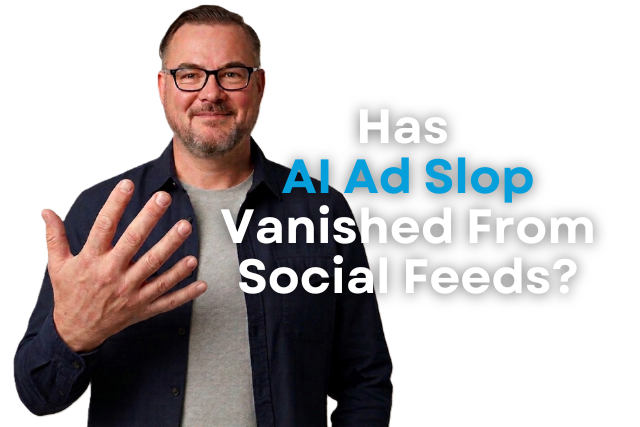
Has AI Ad Slop Vanished From Social Feeds, or Has It Just Got Smarter?
What is AI ad slop? AI ad slop refers to low-quality, mass-produced visual and written content generated by artificial intelligence tools for marketing campaigns. Characterised by uncanny, cartoonlike imagery, weird digital artifacts, and generic copy, AI ad slop flooded social feeds to cut production costs, though it often harms brand trust and user engagement.
Remember scrolling through LinkedIn or Instagram last year? Every third post seemed to feature a bizarre, hyper-polished 3D cartoon figure with six fingers, holding a steaming mug, telling you how to scale your SaaS business.
It was everywhere. Marketers dubbed it "AI slop", and for a while, it felt like the entire digital advertising space had surrendered to cheap, automated templates.
Lately, though, your feed might feel a little different. The garish, plastic-looking visual ads seem to have quietened down. But has the tide finally turned against cheap synthetic media, or have AI-generated ads simply grown up and learned how to blend in?
At Axcellerate, we have been keeping a close eye on this shift. Here is what is really happening behind the scenes, why audiences are exhausted by lazy automation, and how UK businesses can navigate the new era of digital marketing.
The Great Fatigue: Why Audiences Rejected Cartoonlike AI Ads
When generative visual tools first exploded onto the scene, advertisers rushed to test them. The appeal was obvious. Why hire a photography crew or graphic designer when an algorithm can produce fifty ad variants in thirty seconds?
The problem was that everyone used the exact same prompts, the same default models, and the same glossy aesthetic. Within months, users developed instant ad fatigue.
Audiences became adept at spotting synthetic content instantly. The moment a potential customer identified a fake-looking visual, their thumb swiped straight past. Rather than building brand equity, these ads signaled that a company was taking shortcuts.
If you are wondering whether this rush to automate extends to search performance as well, take a look at our analysis on will using AI content on my business website ruin my Google rankings. The short answer? Search engines and human readers share the exact same instinct: they reject low-effort filler.
Has AI Slop Gone, or Has It Just Got More Sophisticated?
The blatant, weirdly proportioned AI cartoons are certainly declining on primary marketing channels. However, that does not mean businesses have stopped using artificial intelligence. Instead, the technology has simply become harder to spot.
Rather than generating obvious fantasy artwork, modern generative tools are being used to create hyper-realistic imagery, subtle synthetic voiceovers, and polished video clips.
Here is how AI advertising has evolved recently:
- Photorealistic synthetic media: Instead of 3D avatars, tools now generate realistic photos of non-existent people in clean studio settings.
- Micro-targeting variations: Brands use automated systems to swap backgrounds, colours, and calls to action instantly based on user demographics.
- Dynamic script generation: AI drafts hyper-specific ad copy variations tailored to niche audience segments.
While these refined ads look less absurd than early iterations, they often suffer from the same core issue: a lack of genuine human warmth. Audiences might not instantly spot the fake finger count anymore, but they still feel the emotional distance.
The Backlash Against Corporate AI Spam
We are currently witnessing a massive movement back toward real human stories. Audiences are tired of polished perfection that says nothing of value. They want real people, genuine opinions, and transparent brand voices.
This shift is precisely why authentic content is outperforming robotic campaigns across every UK industry. When every brand relies on the same algorithmic templates, real human messiness becomes your biggest competitive advantage.
To explore why audience trust is collapsing around automated messaging, read our deep dive into the backlash against corporate AI spam and why authentic content wins in 2026.
Finding the Right Balance for Your UK Marketing Strategy
Does this mean artificial intelligence has no place in modern digital advertising? Not at all. At Axcellerate, we view automation as an assistant, never as the creator or the voice of your brand.
The trick is knowing where efficiency helps and where it destroys authenticity.
Where AI Works Best:
- Brainstorming initial concepts and ad angles
- Analysing campaign data and performance trends
- Automating repetitive background administrative tasks
Where Human Strategy Must Lead:
- Brand storytelling and emotional connection
- Final creative direction and copywriting tone
- Building genuine customer relationships
Sometimes, as a marketer, trying to keep up with the endless noise of automated tactics can leave you feeling completely overwhelmed. If you have ever felt like you are running on a digital treadmill, check out our recent LinkedIn post on marketing activity fatigue to see how fellow UK business leaders are tackling the exact same challenge.
Summary: Winning Content Focuses on Connection, Not Shortcuts
The cartoonish AI ad slop that swamped our feeds may be fading, replaced by slicker synthetic alternatives, but the underlying audience demand remains unchanged. People want to buy from businesses they trust.
If your marketing feels generic, no amount of sophisticated algorithm work will salvage your conversion rates. Focus on original insights, real case studies, and human messaging that resonates with your target audience.
Ready to Build an Authentic Marketing Strategy That Converts?
At Axcellerate, we help UK businesses cut through the automated noise with high-impact, strategy-led digital marketing that drives measurable growth.
Get in touch with our team today to discover how we can transform your brand strategy and attract real, loyal customers.