
Life Before Google: How Marketing Evolved from Guesswork to Precision (and Where AI Takes Us Next)
Cast your mind back to the late 1990s. Dial-up internet screeched through house phones, telephone directories weighed down coffee tables, and advertising was a gloriously expensive game of creative intuition.
Before search engines transformed how we discover information, traditional routes to market relied heavily on print, television, radio, and massive outdoor billboards. Agencies poured colossal budgets into campaigns without any real-time feedback loops. You dropped a campaign into the world, crossed your fingers, and waited to see if high street sales went up. As legendary retail pioneer John Wanamaker famously noted, half the money spent on advertising was wasted; the trouble was nobody knew which half.
When Cutting-Edge Tech Looked Like a School Project
Back in the late 90s, pushing technological boundaries in advertising took extraordinary effort. Working on high-profile campaigns for global giants like Sony at TBWA/London, or launching massive pushes for Unilever's Magnum ice creams whilst at McCann Erickson, meant operating on the bleeding edge of available technology.
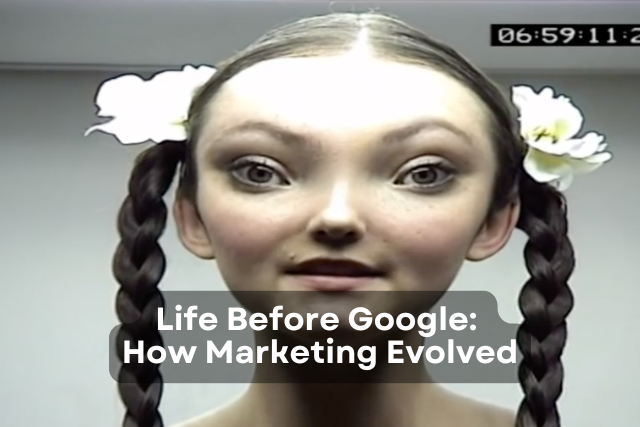
Those campaigns cost absolute fortunes. Teams spent months orchestrating complex media buys, high-end film shoots, and early digital elements that pushed computer processing power to its absolute limits. Looking back at those digital assets today, they look less like multi-million pound marketing masterclasses and more like clunky school projects. Yet, at the time, they were groundbreaking. They captured imagination because creative storytelling had to carry all the weight when precise audience targeting did not exist.
The Great Migration: Enter Data, Trackability, and Intent
When Google arrived in 1998 and refined its search algorithms over the early 2000s, everything changed. Traditional marketing routes rapidly migrated online. For the first time in advertising history, campaigns became genuinely trackable.
Instead of paying for broad impressions, businesses could track click-through rates, cost per acquisition, and direct online conversions. This shift changed creative strategy entirely.
- Short-form messaging replaced broad narrative storytelling: Ads had to catch attention in split seconds on search engine results pages and early social feeds.
- Intent surpassed demographics: Instead of guessing what a 30-something homeowner might want based on TV viewing habits, marketers could serve ads at the exact moment a user searched for a solution.
- Data-driven iteration took over: Creative concepts were no longer set in stone; they were A/B tested continuously to optimise performance.
This shift laid the foundation for modern performance marketing. To understand how businesses build transparent reporting models in this measurable environment, explore how do I track the actual return on investment of my digital marketing.
The AI Frontier: What Comes After Search?
We are currently witnessing another seismic shift equal to the arrival of search engines. Artificial intelligence is reshaping how people find products, answer questions, and interact with brands. Large Language Models (LLMs) represent a fundamental turning point in how consumers discover information. To see why this shift is so significant, read our piece on the new era of engagement: why LLMs are the biggest shift in marketing since the smartphone.
Just as traditional media adapted to search, modern digital content must adapt to AI engines. Here is a glimpse at where marketing technology is heading across three horizons:
- The Probable (Near Future): Conversational Search Dominance Generative engine optimisation (GEO) will sit alongside traditional SEO. Consumers will increasingly rely on AI platforms to aggregate answers rather than clicking through traditional search listings. Learning how to get your website content cited by ChatGPT and Google AI Search is already becoming essential for maintaining brand visibility.
- The Possible (Medium Term): Fully Hyper-Personalised Ad Creative Instead of static ad sets, AI will generate unique, real-time creative assets tailored to an individual user's immediate context, emotional sentiment, and browsing history. Two people searching for the exact same service will see completely distinct copy, visuals, and offers designed specifically for their personal decision-making style.
- The Blue Sky Future (Long Term): Intent-Predictive Autonomous Commerce Moving beyond search altogether, personal AI agents will negotiate directly with brand AI systems. Your digital assistant will anticipate your needs based on biomechanic data, schedule, and habits, purchasing goods or booking services on your behalf before you even articulate the search query. Marketing will evolve from convincing human buyers to optimising value exchanges between autonomous AI agents.
Looking Ahead Without Losing the Craft
While tools and tracking capabilities have changed beyond recognition since the days of late-90s print and TV campaigns, the core principle of great marketing remains unchanged: understanding human motivation. Technology simply gives us better tools to deliver the right message at the right moment.
At Axcellerate, we help businesses navigate these digital transitions, combining data-driven SEO strategies with clear, purpose-led growth. Whether you are optimising for Google or preparing your brand for the age of AI search, keeping your business ahead of the curve is what turns marketing into real commercial success.